
Program Add-On
Fire Ant Control for DFW Lawns
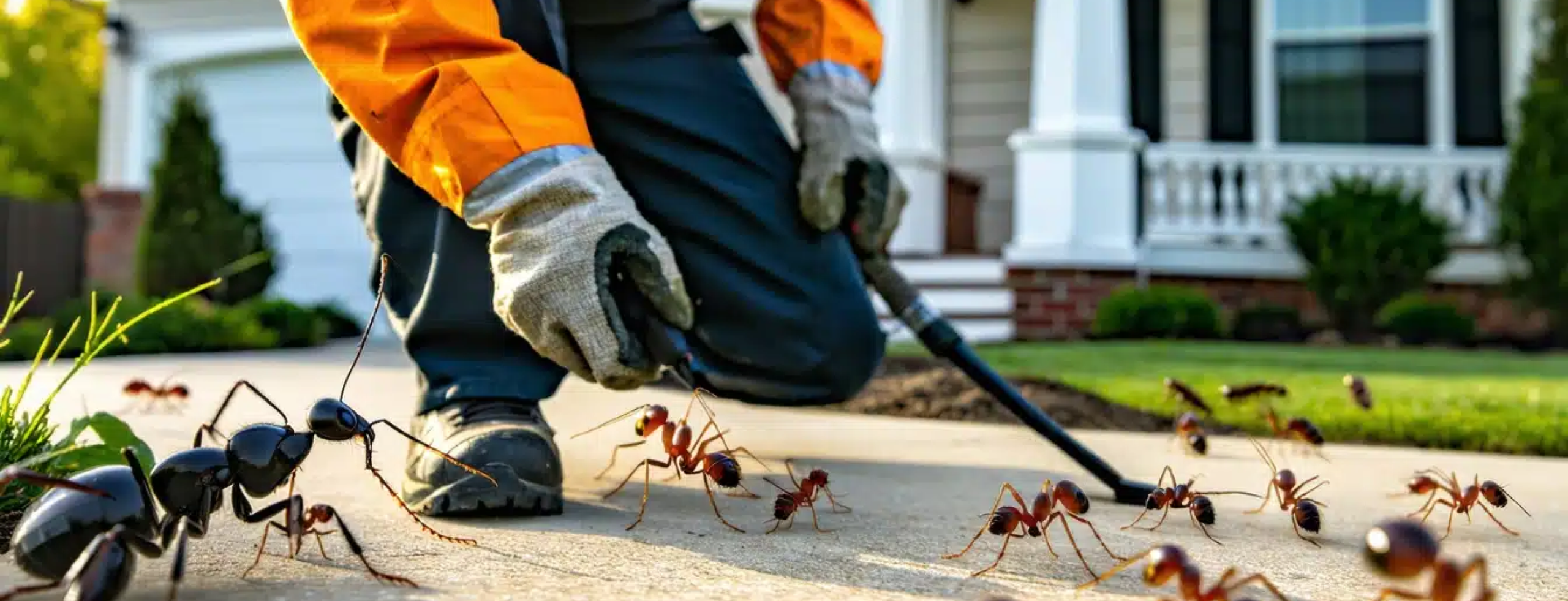
Fire ants can quickly turn your yard into a battleground. We understand the importance of a peaceful outdoor space — and we treat for them without abandoning the soil-first approach. Fire Ant Control is an add-on to the Soil Building Program.
The Problem
North Texas is close to ideal for fire ants
Warm, moist ground with heavy clay supports fire ants, making them common for DFW homeowners.
The visible mound is just a small part of the colony. Most, including the queen, is underground, so treating it often leads to reappearance nearby.
And unlike most lawn pests, fire ants are a safety issue rather than a cosmetic one. A single disturbed mound can mean dozens of stings, and that changes how a family uses its own back yard.

Our Approach
A multi-step approach, not a single spray
We use a multi-step approach, applying targeted treatments to eliminate active fire ants and prevent severe infestations from taking hold. Treatment layers onto your Soil Building Program rather than replacing any part of it.
-
We inspect and map
Before treating anything we assess the soil and locate active mounds, including the ones in the places people do not look — bed edges, fence lines and under low shrubs.
-
We treat the colony, not the mound.
Targeted treatment is applied so that it reaches the colony below the surface rather than just the visible top.
-
We treat broadly enough to matter.
Spot-treating one mound in a yard with six colonies does not solve the problem, so treatment covers the areas where colonies are established or likely to establish.
-
We come back.
Fire ant control is a quarterly service, because a single treatment does not hold across a North Texas year. Re-treatment is what keeps the yard usable.
The Organic Route
If you want to stay 100% organic
Fire ants are pests targeted by nematodes. These microscopic worms enter ants and release bacteria that kill them in three to five days, without chemicals.
Nematodes act gradually, best used in spring and fall as a continuous solution. For active infestations with children, we’ll advise the best approach.

Safety
What we use, and where
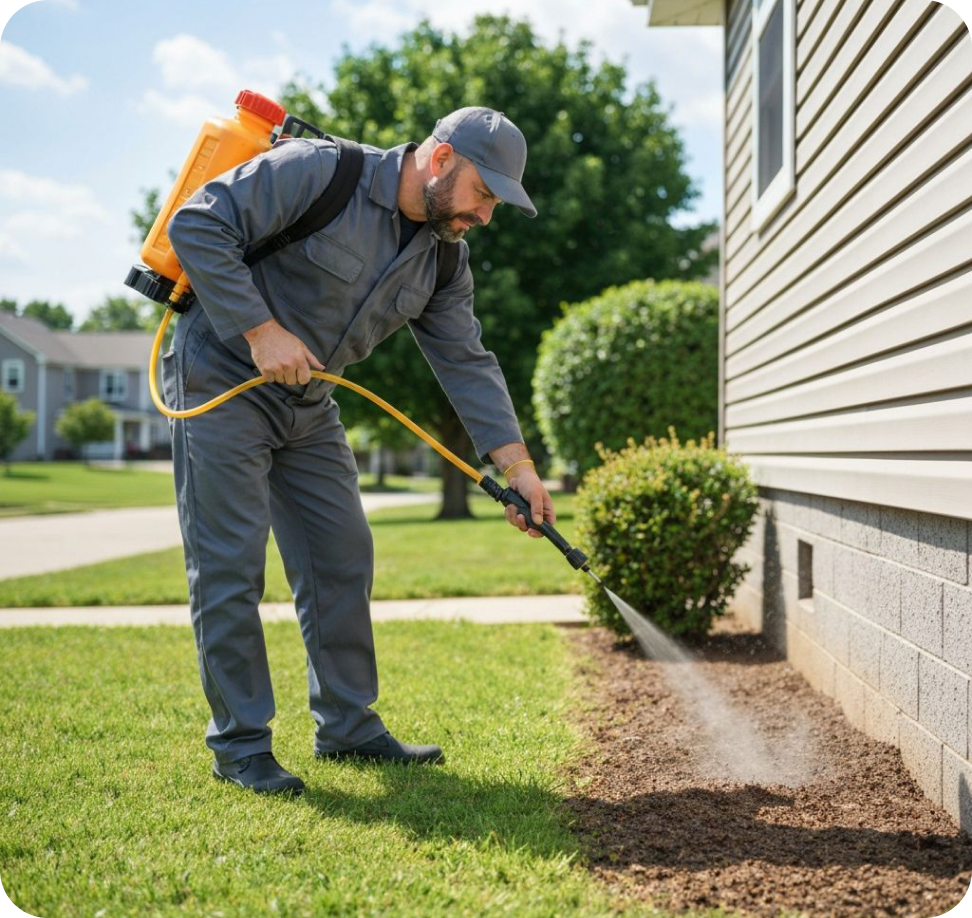
Our core program is organic and safe for children, pets and pollinators, and that does not change when we add fire ant control. Where a conventional treatment is used, it is applied to the colonies and the areas around them rather than broadcast across your whole lawn — the same targeted logic we apply to weeds, where spot-treatment means up to 80% less chemical than a conventional company would use. If you would rather we used no conventional product at all, the nematode route above is a real option and we will say so.
Pricing
Billed quarterly, on top of your plan
Fire ant control is an extended service, billed as a quarterly recurring charge in addition to your Soil Building Program plan. Your quote depends on property size and how established the colonies are. We will price it when we assess your soil.

Common Questions
Lawn Care FAQs — DFW
Quick answers to what DFW homeowners ask us most often.
-
Because the visible mound is a small part of the colony. If the queen survives, the colony relocates and rebuilds — often only a few feet away, which looks like a new mound but is the same colony. Effective control has to reach below the surface and be repeated across the season.
-
No. It is an extended service billed quarterly on top of your Soil Building Program. We would rather be clear about that than surprise you on an invoice.
-
Honestly, no — and neither can anyone else in North Texas. Fire ants are established across the region and new colonies move in from neighbouring properties. What quarterly treatment does is keep your yard clear and usable rather than letting an infestation become severe.
-
Our organic program is. For fire ant treatment specifically, product is applied to colonies and the surrounding area rather than broadcast, and we will tell you when to keep children and pets off the treated area. If you want a fully organic approach, beneficial nematodes are the alternative.
-
Colonies are most active in the warm months, but quarterly treatment through the year is what prevents the spring surge from becoming a summer problem. If you have an active infestation now, we can start now.

Get your yard back
We'll assess the soil, find the active colonies, and tell you what it takes to clear them.