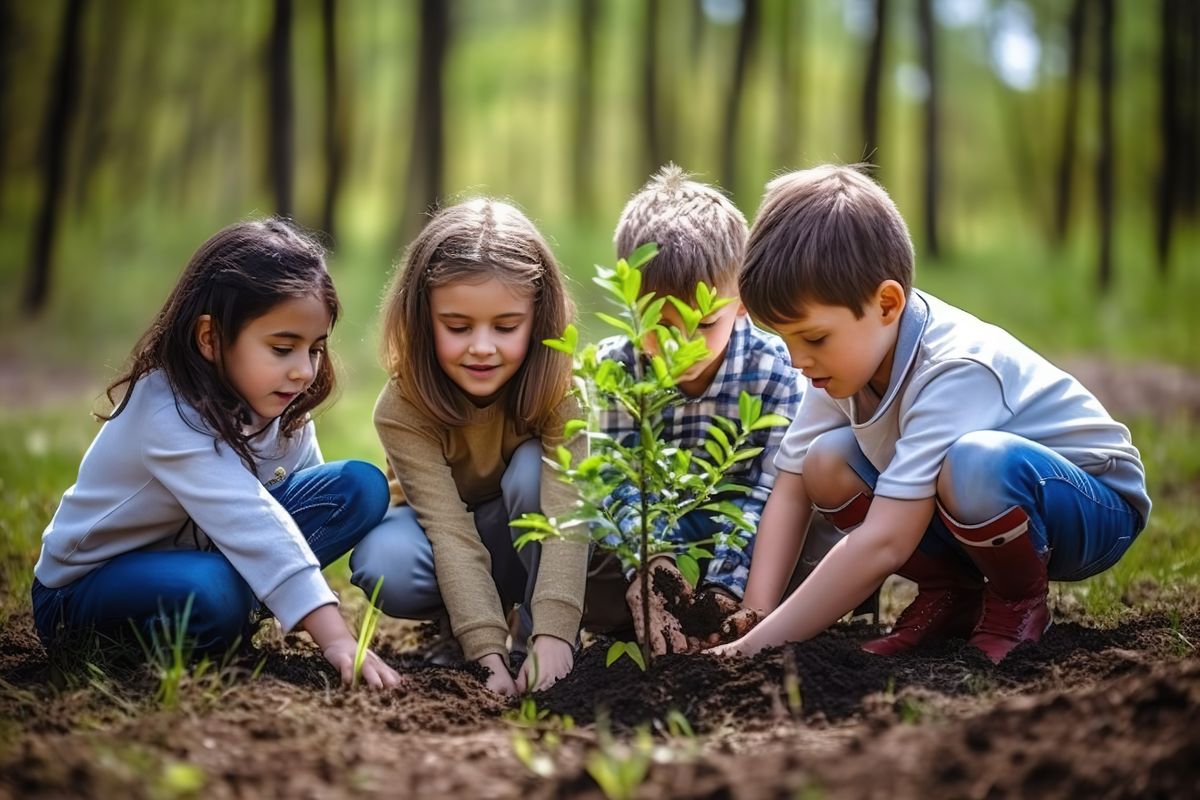
1 in 5 children today struggle with a war in their mind. Nearly 20% of children and teens nationwide (aged 3-17) struggle with a mental, emotional, or behavioral challenge (according to the American Academy of Pediatrics). The challenge causes academic performance, family dynamics, and their happiness to suffer. Athletes use meditation to help quiet their mind, focus during the game, and reach peak performance. Schools are now using meditation to reduce behavior problems. And Green Schoolyards offer children a place to explore and develop healthy minds and bodies.
The War in Kids' Minds
Athletes Who Meditate
Athletes like Patrick Mahomes and Michael Jordan meditate. Patrick Mahomes, born in Tyler, Texas in 1995, became the Kansas City Chief’s starting quarterback in 2018. He went on to lead the team to 5 Super Bowl appearances, winning 3 of them, putting him in the Top 5 Quarterbacks of NFL history. One of his winning traits? Meditation.
6 Things Only
The Kansas City Star tells the story of how Patrick Mahomes, before he began his NFL career, met Paddy Steinfort, a mental performance consultant. “[Paddy Steinfort] used to talk about how your mind can only think about six things at the same time,” Mahomes said. “And if you were focusing on the crowd, and then you’re focusing on how big the game is, then you’re not thinking about what coverage is the nickel (cornerback) playing, or how’s the nickel going to adjust versus this coverage and stuff like that. So I kind of just keep it in that perspective.”
The Mindful Athlete
Michael Jordan is another athlete who put mindfulness to work, helping him lead the Chicago Bulls to six NBA championships. He credits the lessons he learned about mindfulness from George Mumford, helping him transform his leadership and helping his team reach peak performance. Mumford wrote a book in 2016, The Mindful Athlete ($16 on Amazon), to share the teachings he’s given to corporate executives, Olympians, and athletes over the years.
Kobe Bryant was another athlete meditator. He had this to say before he passed: “George helped me understand the art of mindfulness. To be neither distracted or focused, rigid or flexible, passive or aggressive. I learned just to be." Lebron James, Barry Zito, Stephen Curry, and so many other athletes use meditation to reach their peak performance.
Kid’s Mental Health
For kids and teens, excessive social media use can lead to anxiety and lower self-esteem. Kids who feel anxious, stressed, and feel that they don’t measure up often struggle to get good grades and thrive in sports. The good news is there’s one thing you can do.
Before your child heads off to school, sit with them for a 15-minute meditation. If it works for peak athletes like Patrick Mahomes, Michael Jordan, and Kobe Bryant…..it’s bound to help you and your child too. In fact, try this 15-minute meditation right now. Just hit play and then close your eyes.
1 in 5 Kids
One research study focused on American teens ages 12 to 15. The study found that children who spent 3 or more hours on social media daily were twice as likely to suffer from depression and anxiety. It may be that anxious kids turn to social media more (a symptom) or that social media harms children, disrupting their brain neurotransmitters, causing poor mental health. Perhaps both.
Nearly 20% of children and teens nationwide (aged 3-17), or 1 in 5, struggle with a mental, emotional, or behavioral challenge (according to the American Academy of Pediatrics). If your child goes to a school with 500 other kids, it’s likely that 100 kids are facing a war on their minds and struggling to earn good grades and create a healthy social environment for your child. One documentary, A Joyful Mind, found that meditation can help children win the battle in their minds. But kids do need us to show them how to meditate.
The Mindful Moment
One school in Baltimore found that a 15-minute daily meditation, what they call the “Mindful Moment,” helped their students dramatically. It led to a shocking decline in the number of detentions: in fact, zero detentions were required after putting this Mindful Moment into practice. For kids in a busy, digital, distraction-cluttered world, social media is not teaching them how to focus. In fact, quite the opposite. Delaying the rewards we want in life (delayed gratification) is one of the foundations for building the Good Life we want to teach our kids how to create for themselves.
Children who learn, from social media, that things come easily, that there is no effort needed, no patience required, are not going to be willing to put in the hard work that creating a Good Life requires. Social media robs our children of learning how to create that Good Life that we want for them. Here's a 5-minute meditation you can do with your child today.
Delayed Gratification and Social Media
Delayed gratification is very difficult for children to learn when they face the war on their minds. A study published in 2025 tracked the social media use of over 4000 children, starting at age 8 and monitoring their use for the next 4 years. The findings?
Approximately 40% of children had high or increasingly addictive use of social media. “These kids experience a craving for such use that they find it hard to curtail,” says psychiatrist J. John Mann, a professor at Columbia University. Here's a 7-minute meditation you can do with your child.
Addiction and Dopamine
Addiction is linked to what every healthy brain needs: the right amount of neurotransmitters, at the right time. Dopamine is needed for many important functions including memory, motivation, mood, attention, pleasure and reward, sleep, learning, and cognition (WebMD). Excessive screen time can impact emotional regulation (calming down), executive functioning (making a To Do list and getting things done), and social development (playing well with others). For older teens, here's a 15-minute meditation
The CEO of YouTube
YouTube's CEO (and many other highly successful business executives) in fact restrict their children's social media use. The country of Australia actually took it a step further, reviewing the science of the dangers to children’s developing brains. They banned social media for children under age 16 and 77% of Australians support the ban.
If your child is struggling in school, or in sports, help them with a daily 10-minute meditation, before they leave for school. Even if your child appears to be super happy, thriving in school and sports, consider how a daily meditation could help them. What new heights could their reach, with a bit of mindfulness and taking back the power of their attention?
Keep an eye on your child’s use of social media, for signs of anxiety, depression, and stress. Make meditation something that’s “cool,” especially for teens, is important especially if their peers are not convinced that it is cool. Show them how by meditating with them. Even us adults need reminders to take a few minutes, put down our screens, and quiet our scattered minds.
Nature Therapy for Teachers and Students
Soils Alive celebrates our 30th year in business in 2027. As we look back on how far we've come since 1997, we're also looking forward to what more we can do to support our North Texas communities. We encourage teachers and PTA leaders to incorporate meditation and nature therapy to help reduce stress in the classroom and beyond.
Plant a 150 square foot garden with 20 plants. Go for a walk outside before work each morning. Plant your garden by a window, so you can sit inside and look out at the garden....even if it's hot, raining, or cold out. Watch the garden change throughout the year from spring, summer, fall, and winter. Get creative and bring some Zen principles into your garden design to make it a place to relax.
Learning More About Meditation
Want to explore more of the science of meditation? Here's some more resources you might enjoy.
- National Geographic shares these four tips to get your kids outdoors. And how the outdoors can boost mental health.
- Meditation study of over 12,000 students found an increase in "prosocial behavior, resilience, executive function, attention and mindfulness, and decreased anxiety, attention problems/ADHD behaviors and conduct behaviors.”
- Looking for more articles about the benefits of meditation? Look no further than David Gerken: “If meditation works for Steph Curry, Lebron James, Michael Jordan, Carli Lloyd, Rory McIlroy, Novak Djokovic and Russell Wilson, why the heck aren’t we having our young athletes do it?”
- Here's a few different types of meditation practices for kids. And what the Compassionate Schools Project is all about.
- Los Angeles Lakers coach Phil Jackson talks meditation.
- Meditation as always staying in the present moment.
- Michael Jordan talks meditation: I challenge myself to be the best
- Flow state and peak performance.
- Bill Beswick: "What do you want in your life? How badly do you want it?"
- The AXIA Elite Performance workshop, featuring Rupert Sheldrake.
- The true purpose of meditation, with Sam Harris and Andrew Huberman