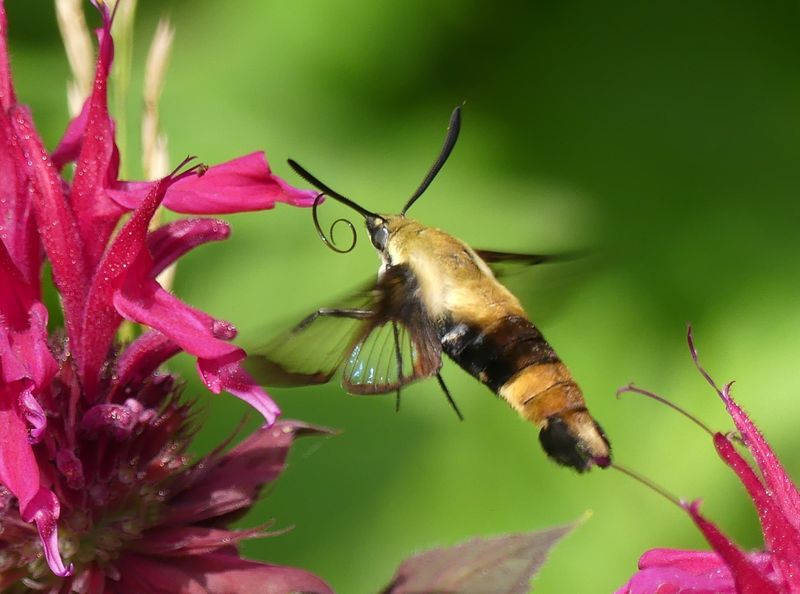
hummingbird moth.jpeg

The Earth Day Schoolyard BioBlitz

Join us March 15 - April 15 for the Earth Day Schoolyard BioBlitz. Get your students engaged in learning STEM subjects and exploring future career paths. Invite your students and their parents to join you and compete with other schools to win a free wildlife garden for your school. Do your students know the names of 5 trees, 5 wildflowers, and 5 butterflies that are native to DFW? If not, there are tons of great wildlife sanctuaries in DFW to go on a fieldtrip. STEM careers are the jobs of the future. Get kids excited about all of our incredible biodiversity at our city parks, wildlife sanctuaries, and in our own backyards.

School Principals, you can help your students improve STEM test scores by creating a free wildlife garden at your campus when your PTA hosts a successful BioBlitz. Soils Alive is donating free plants for school gardens during our Earth Day plant sale. Get your students more engaged with their teachers to learn about the scientific method, nature observation, data collection, biochemistry, and AI innovations in nature research. Photo Credit: the Snowberry Clearwing by Karalyn (CC BY-NC).

You're Invited

Get ready for March 15th for the kickoff of the Earth Day BioBlitz, open to all Richardson ISD schools. To participate in our BioBlitz, be sure and have your PTA members purchase 5 trays of Native Plants before March 15th during our plant sale. All RISD schools can participate for free in our BioBlitz, for the chance to win one of the 5, FREE trays of native plants ($500 value). The 5 schools whose teams photograph the highest number of species (of plants, animals, or fungi), using the free iNaturalist app, will win $100 of free native plants.

For RISD schools who have ordered 5 trays of plants by March 15th, all of your teachers, parents, and students are eligible to participate in the BioBlitz. Snap photos of plants, animals, and fungi using the free iNaturalist app on your phone to discover the names of butterflies, beetles, wildflowers, native bees, mushrooms, and more. See which of your friends can find the most wildlife. DFW is home to thousands of species of butterflies, dragonflies, moths, skippers, bees, lizards, frogs, birds, and beetles.....not to mention our native trees, shrubs, grasses, sedges, rushes, and forbs.

Why Join a BioBlitz?

Joining a BioBlitz is fun. It's a great way to invite a few friends to go visit 4 city parks you've never been to, and see how much wildlife you can find. Get some weekend exercise in while you watch our plants wake up in March and April from winter, and the early spring critters start moving around.

After a rainstorm, you'll likely find mushrooms popping up. Plan on a daily 15 minute morning walk to find wildlife in your neighborhood. You can use the free iNaturalist app on your phone anytime to observe wildlife. It's even more fun when you invite a few friends to join you, and when your observations can help win a prize for your child's school!

A BioBlitz is a great way to meet new friends who also care about nature. When schools build more wildlife gardens, there are so many benefits including improved academic performance, reduced stress and anxiety for students, improvements to physical health, and so much more. When HOAs build wildlife gardens at city parks, we create more habitat to support the Monarch butterfly.

Where Can I Go Explore DFW Nature?

Start by visiting your nearest Richardson city park, and then explore another city park you've never been to before. If you want to drive a little further, we also highly recommend visiting LLELA in Lewisville, Oak Point Park in Plano, and Monarch View Park in Frisco.

Lewisville: On the 1st Saturday of the month, April 4th, you can volunteer at LLELA's native plant nursery. $5 cost per vehicle to park. Volunteer 9-12, then have lunch, and hit the trails from 1-4 and use the iNaturalist app to take photos of what you discover. Did you know LLELA has a summer camp for kids age 7-12? Register your child by May 29th for five half-days of activities for $150. High school students can join LLELA's Natural Pathways program, meeting 9-12 on 2nd Saturdays of the month. LLELA has 7 nature trails with over 6 miles of nature to explore. Be sure and check the condition of the trails before you go.

Plano: Oak Point Park is a Certified Audubon Cooperative Sanctuary, with 800 acres that you can explore with 4 miles of trails. You'll find native trees including Eve's Necklace, Bur Oak, and Bois d'Arc as well as many native plants.

Frisco: Monarch View Park was recently planted with over 5000 native plants showcasing 80 different species, thanks to the volunteer efforts of the Blackland Prairie chapter of the Texas Master Naturalists and funding from H-E-B. Visit the park to see how native plants can add beauty to city parks, reduce erosion, and attract butterflies and hummingbirds.

What is a BioBlitz?

Since 2018, the National Recreation and Park Association (NRPA) has hosted their national Parks for Pollinators BioBlitz, every September. Our Earth Day BioBlitz is focused primarily on public schools, to invite teachers, parents, and students to go out and visit their city parks. Across the country, during a BioBlitz city residents will take pictures of wildlife found at their local city parks. The 2024 NRPA BioBlitz campaign included the cities of Allen, Plano, and Cedar Hill as well as San Antonio, Pasadena, Galveston, Pflugerville, and Georgetown.

What is iNaturalist?

iNaturalist is a free app you can download on your phone to identify what you're looking at whether it's a tree, bird, insect, grass, wildflower..... you name it. If it's alive, you can probably figure out what it is by just snapping a photo. Students under the age of 13 are invited to use the Seek app instead. Another way is for parents to use their own iNaturalist app and visit city parks with their child to observe nature together.

iNaturalist began as the Master's degree final project of 3 students at UC Berkeley in 2008. Since 2017, iNaturalist operated as joint initiative with the National Geographic Society and the California Academy of Sciences. In 2023, it became its own non-profit organization. You can make a charitable contribution to help support the work of their team. Nearly 4 million people have used the platform to collect data and observations of 500,000+ species of plants and animals globally.

Not bad. That's almost half of what science is aware of today (~1,200,000 species on the surface of the planet). But if we keep in mind the 7,000,000+ more species science has yet to discover, we realize that our scientists best knowledge on a biology exam would earn us a grade of 15%. We can list and name only 15 out of 100 living things. There's still so much we don't yet know about the natural world, waiting for us to discover. Learn about how Danish schoolchildren are discovering never-before-seen species of life on our planet.

How can my school attract more wildlife?

Plant a wildlife garden. That's the best way to create more habitat to attract more wildlife to your school, so you can do another bigger BioBlitz next year right at your school. Here's some of of the benefits of providing K-12 students with a wildlife garden. Make a plan to build a wildlife habitat in Spring 2026, so that next year you'll discover more critters at your school. Ask 5 of your PTA members to buy a tray of plants, so we can give you a tray for free for a school garden.

Resources For School Principals and PTA Leaders