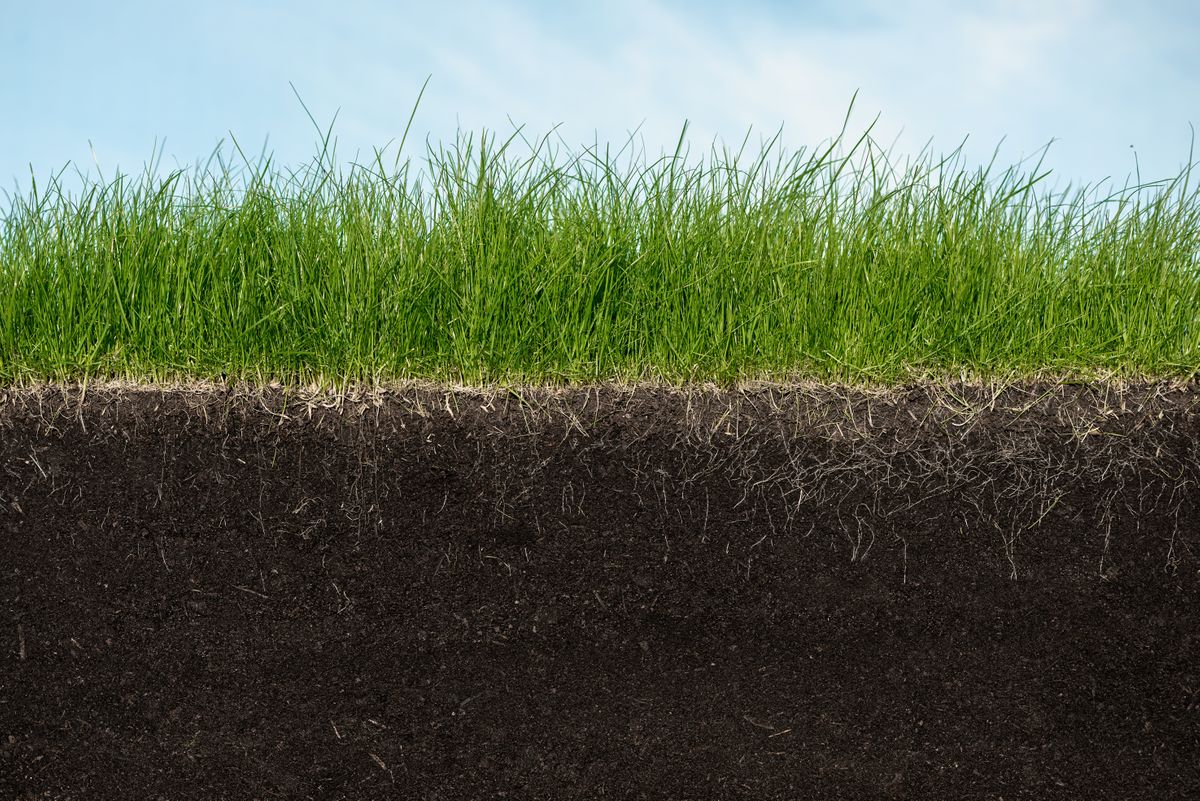
Soil compaction causes unhealthy grass roots. Roots have to work harder to access water, air, and nutrients in the soil, and they don't grow as deeply as they should to avoid drought stress. A core aeration helps reduce compaction and bring these three vital ingredients for lawn health....directly to the root zone. How can you tell if an aeration can help your lawn? When is an aeration not such a good idea?
Core Aeration for a Greener Lawn
how aeration works
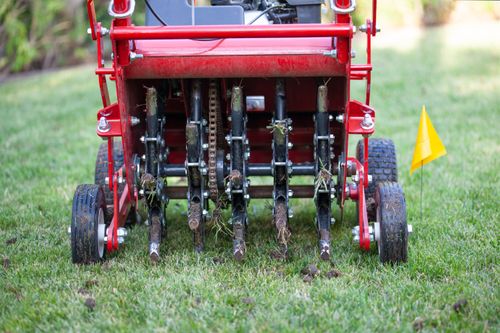
A core aeration uses a machine to pull out little 2-3" plugs of soil, all throughout your lawn. These soil plugs naturally break down after a few weeks, leaving behind lots of channels open in your lawn to promote healthy root growth.
Areas in the lawn that get walked on a lot, over time, get compacted. Think of your body weight being compressed down onto your toes and heel. All that weight pushing down, smashing all the air pockets in the soil. Compaction closes off all the empty pores in the soil, so that when it rains all that water pools on the surface of the lawn, rather than soaking in. When water pools, that leaves moisture near the surface, near grass leaves, making it more vulnerable to fungal diseases, especially for St. Augustine lawns.
Does My Lawn Need Aeration?
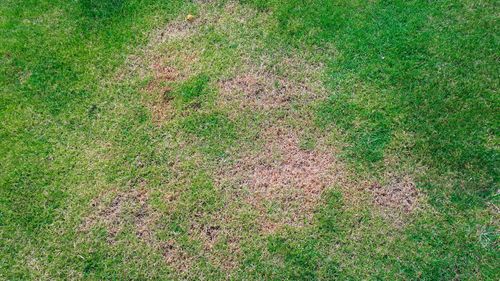
Not all lawns need aeration. Lawns that benefit the most are those that have thinning patches of grass, a thick layer of thatch that isn't breaking down, or water that pools near the surface after heavy rain.
If you press your thumb into your soil, it should compress a little. That's your thumb pushing down on all the air pockets in the top 6" of soil. If there is little or no give, then there's no air pockets to compress! You should consider a core aeration to help bring more oxygen to the root zone, and let water soak in faster during heavy rain, to stimulate deeper, healthier root growth.
Healthy Roots = Healthy Shoots
What you see above ground is a reflection of what's going on underneath the soil surface. If the top growth of your lawn isn't looking great, the solution may be to correct soil problems, like helping to reduce compaction.
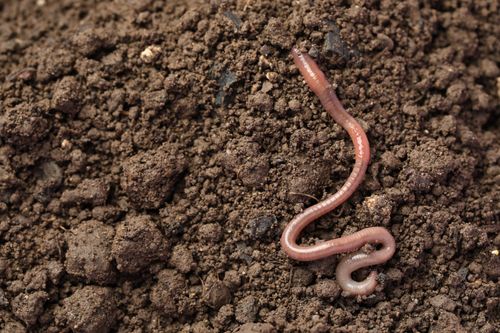
Another reason soil may be compacted is that there aren't many earthworms in your soil. Worms love soil that has thatch to feed on (which is why you want to mow and leave your clippings behind). They also love soil that is not contaminated with harsh chemicals. Using less lawn chemicals, and more organic fertilizers, can help boost the worm population which naturally tills through the soil, especially the top 6". This helps grass roots grow deeper, balancing the negative impact of the frequent walking that happens on urban lawns.
Getting Ready for Your Aeration
Soils Alive offers core aeration services in the spring and fall. Before we come out, be sure to mark your sprinkler heads so that our technician can avoid damaging them. Properly marked heads that are damaged by our aeration process will be repaired. Also let us know if you have any areas in your lawn with drip irrigation (especially the strip by the curb) as those areas we want to avoid completely. If your lawn has experienced heavy rain, we will want to reschedule your core aeration to avoid machine damage to your grass. Moist but not soggy soil is ideal for an aeration.
When should you not aerate your lawn? When you've recently installed new sod that has not yet fully put down roots. Core aeration machines are quite heavy, and they pulls soil plugs up and out, so you'll want to wait until your grass has rooted in well, to avoid damage.