AdobeStock_243662046.jpeg

4 Kid-Friendly Ways to Celebrate Winter

Winter break is almost here! Teachers, you've almost made it. Winter break means lots of fun and festivities inside where it's warm. But if your kid, or kids, have a tendency to get bored, you might enjoy these four ways to get them back outside exploring.

Did you spend your childhood (before cellphones) outdoors playing during winter? Give the gift of nature to your kids this season, and pass on your memories and even make a few new ones this holiday season. Here's how.

5.jpeg

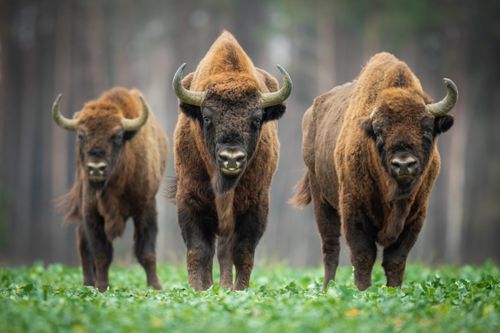
Almost extinct, the European Bison now thrives in the Białowieża Forest, a UNESCO World Heritage Site.

1. Take the kids on a hayride to go see the Bison at the Fort Worth Nature Preserve. Tickets are on sale now, for hayrides on Christmas Eve and New Year's Eve, and a few other dates coming up soon. Did you know that Christmas caroling in Europe has a long tradition of going house to house to sing songs, dressing up as wild creatures, including the European Bison (the Turon)?

Bison are the largest herbivores in North America, and they almost went extinct both in Europe and America, before work began about 100 years ago to care for this beloved, wild creature. Give your kids the gift of getting to see the Bison and learn more about the art, stories, and legends people have cherished for at least the past 10,000 years.

AdobeStock_247999949.jpeg

2. Make a winter wreath with the kids. While DFW doesn't have spruce trees commonly used for wreathes and Christmas trees, we do have Eastern Red Cedar and Southern Wax Myrtle for your wreath's greenery. Add a pop of red color with our North Texas native Yaupon Holly tree.

Plant a few of these in your backyard, and you’ll have plenty of red berries every year to share homemade wreaths with neighbors and friends. For centuries, the leaves of our native holly have been used to make a healthy, herbal tea packed with antioxidants.

AdobeStock_114312708.jpeg

3. Make a pinecone bird feeder. Kids of any age can help with this activity, and it's a great way to get birds to visit over winter. Hang them as ornaments outdoors from tree branches by a window.

Pinecones are a great way to get kids more interested in learning about math. Another great way to attract birds in winter is to add Purple Coneflowers to your garden (we will have these for sale during our Earth Day plant sale, in April, supporting public school teachers and PTAs).

AdobeStock_243662046.jpeg

4. Make a festive Poppy Seed Roll, and share the story of the red poppy flower with your kids. Since WWI the red poppy has been a symbol of holding on to hope and faith during dark times. We hope this holiday season brings you and your loved ones much joy and peace as we look back over the past year.

We light our candles this holiday season, as the days get darker, with hope and faith for all the good things we know are coming to us in the new year. Learn about the history of the Advent wreath, the auroch paintings in French caves 20,000 years ago, the Flanders red poppy of WWI, and the humble pinecone with its hidden mathematical link to the spirals of galaxies and sunflower seeds.

AdobeStock_399317725.jpeg

The Advent Wreath

Making winter wreathes is a tradition that goes back at least 500 years, if not 1000. The use of holly and ivy was popular in the 1500s, which is how we came to sing this popular Christmas carol, from the people of Wales: "Deck the Halls with Boughs of Holly."

The invention of the Advent wreath itself is credited to Johann Hinrich Wichern, who in the year 1833 in Germany made the wreath to save himself from nagging children! The orphaned children in his care would come to him daily asking, "Is Christmas here yet?"

His reply? Lighting one more candle (20 small red and 4 larger white), one more each day leading to the day of Christmas, saying “No, my children, not yet. Not until all the candles are lit!” Maybe kids haven't changed much in 200 years?

German immigrants to America brought their Advent wreaths with them in the 1920s. The wreath, having no beginning or end, reminds us of the endless turning of the seasons. New babies are born each year, and grandparents pass away, but life continues on.

For the Christmas tree, we have the British to thank, with the first British tree making its debut in the year 1800. Queen Victoria, and her marriage to the German Prince Albert, made the Christmas tree much more widely popular after 1848. The first Christmas tree farm in America opened in 1901, in New Jersey.

Turon 1920 Krakow museum.jpg

Bison Caroling

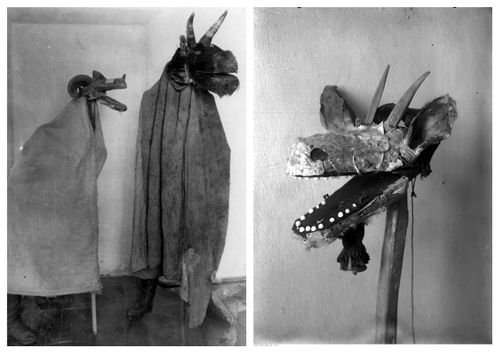
Did you know the Bison was a key part of the caroling traditions in Europe, for at least the past 1000 years? Dressing up as the "Turon," the men of the village would dress up and impersonate the dancing and jumping of the bison.

"With musky-smelling hair, silver bull horns, and a snapping jaw pierced with nails, he dances and jumps to the music, sometimes pouncing on children." The photo above is of two such costumes, worn by winter carolers (the photo taken in the 1920s at the Ethnography Museum in Kraków, Poland). "Men dressed as aurochs (Turon) and danced in rituals intended to bring fertility to their communities and farmland."

"The modern Turoń entered each home to chase people, particularly children, and dance frantically to the music. He then collapsed into a lifeless heap on the floor, only to be “reborn” when the carolers or hosts provided him with a small sip of vodka. After drinking it, he sprang to life again."

Ahh yes, the most important sip of vodka that can bring almost anything back to life! The word "Turon" refers actually not to the Bison, but to the much older Auroch, painted on cave walls at Lascaux 20,000 years ago in southwestern France.

It was an enormous beast described by Julius Caesar as “little below the elephant in size.” Read more about the history and the meaning of the European and American Bison in our Facebook post for our Earth Day plant sale.

Where can you go see the Bison? We're super lucky in DFW to be very close to Fort Worth, which offers hayrides where you can go see the herd of Bison that for the past 50 years has called the Nature Center home.

Go for a visit, at 10am or 1pm, on one of the four days the hayride is being offered (December 23, 26, 30, and 31). Register online right here. Kids can learn a bit more about the Bison before they go, with these activities.

You might even make your own Turon for your Christmas caroling, with these fascinating instructions and explanation of what the Turon continues to represent. Take a peek at what traditional caroling festivities going back 1000 years looks like and all the fabulous creatures that danced as the days grew darker.


AdobeStock_440317157.jpeg

Keeping Faith

Red poppies have been a symbol of hope and faith, ever since World War I. The famous poem about the red poppy, “In Flanders Field,” was written right after the Second Battle of Ypres.

Moina Michael after reading the poem went on to write her own, “We Shall Keep Faith.” Thanks to her faith and devotion, the symbol of the red poppy was adopted in 1920 by the National American Legion as the American emblem of remembrance of those lost to war.

If you love the bright, hopeful red poppy flower, you should try making a holiday sweet with poppy seeds. The Poppy Seed Roll ("MaKowiec zawijany" in Polish) is filled with poppy seeds, nuts, dried fruit, and soaked raisins. It's a bit of work to make, but with these instructions you can't go wrong.

Read the funny story from 2006 of the man who loved this Poppy Seed Roll so much it led to some unexpected trouble! And if you have a bit of space in the garden with full sun, try growing one of the heirloom poppies from Baker Creek, like the traditional Red Flanders or the Giant Rattle Breadseed with a pink bloom (a better choice if you're wanting the seeds!)

AdobeStock_544738548.jpeg

Galaxy Math

Want to attract more birds to come for a visit to the yard? Make a pinecone bird feeder with the kids. It is almost too simple to make (if that is a thing?)....with these easy instructions for kids of all ages.

If your kids love birds, one of the best places to take them is LLELA in Lewisville. The Nature Preserve offers lots of trails to walk through the forest and see all the birds that visit the wetlands.

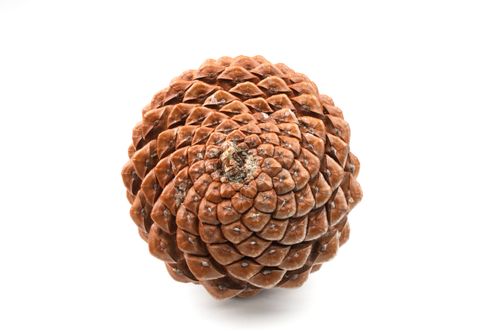
Who knew Pinecones could be used to teach math? If you have a kid that has a love/hate relationship with math, making a pinecone bird feeder might just get them to take math a bit more seriously. The Fibonacci sequence is a mathematical string of numbers that governs the development of natural forms in flower blooms, broccoli heads, galaxies, and yes, even pinecones. Had I known this in elementary school, I would have become a math nerd immediately (maybe it's better I discovered it in high school?)

Purple Coneflower 2.jpeg

Native Plants

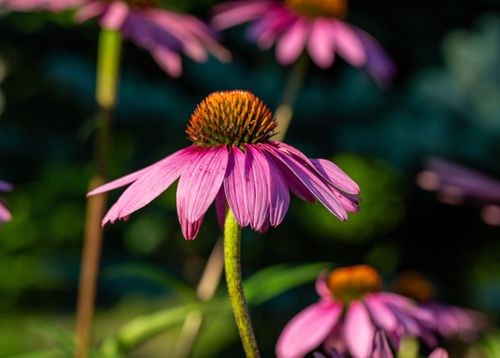
Another great way to attract birds to your yard over winter is to plant the native Purple Coneflower. Any native plant gardener will tell you….these plants produce a ton of seeds!

Birds come to feed on all the bountiful seed during cold months, helping them survive a cold winter when there's little food available. The Coneflower is also a host plant, meaning that certain butterflies will lay eggs and their caterpillars feed on the leaves, bringing more butterflies to your garden.

Learn about our favorite native plants for DFW gardens. Earth Day is April 22nd and that's the perfect time to plant a new garden with native flowers. We'll have lots of plants to chose from during our plant sale, helping raising money for public school teachers and PTAs across North Texas.

Follow our event on Facebook for updates. And be sure and get your order for plants turned on by March 15th, before we sell out. We hope to see you for Earth Day at end of April! From the team here at Soils Alive....we wish you a very happy holiday, during this winter season.